January 2026
Web Design & Developement
LocaLaw
1.
UX Research → UX Design → Framer Development: a complete strategic approach
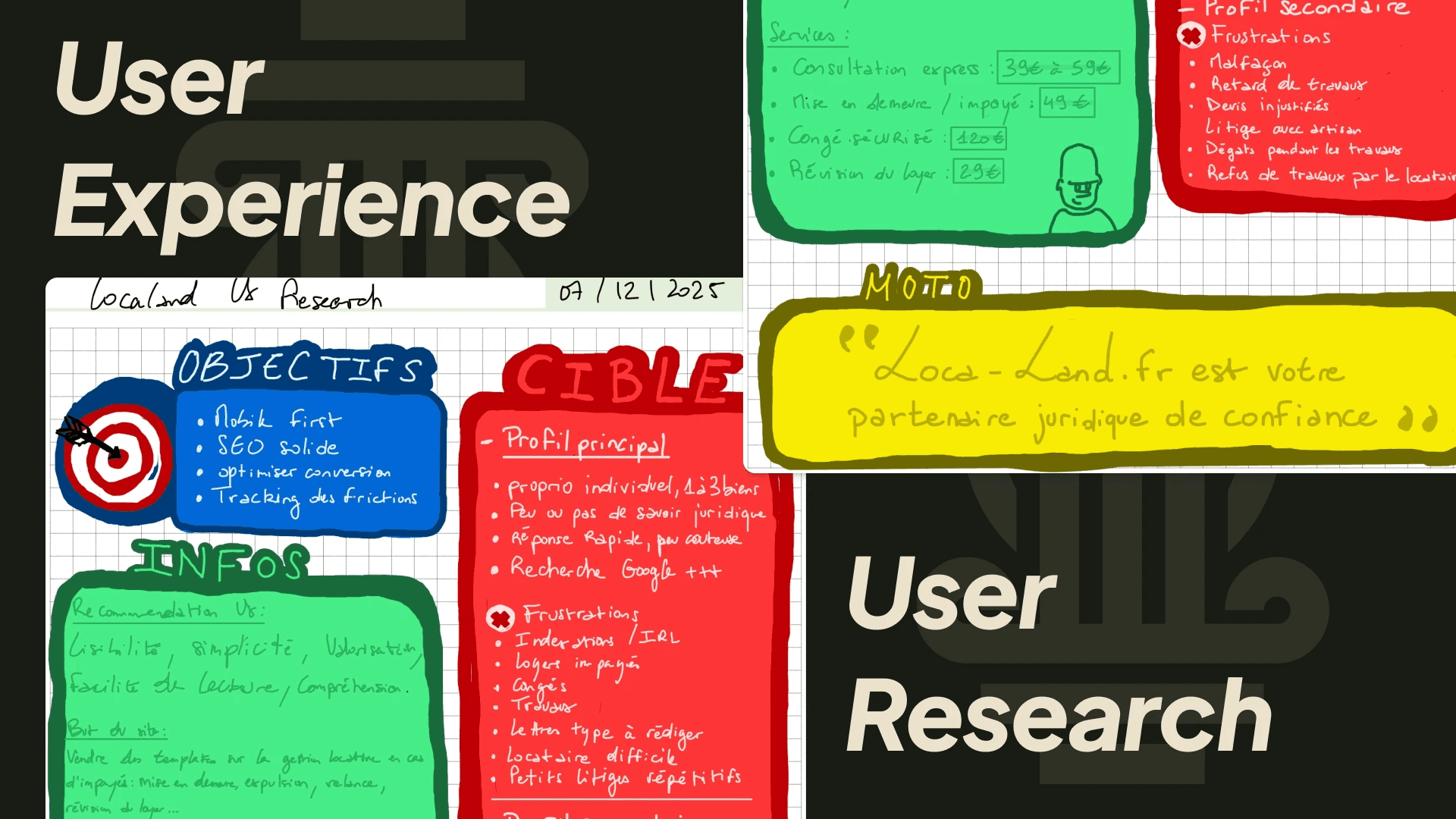
I was involved in the entire process: user research to understand the personas (novice landlords, lawyers looking for resources, property managers), optimization of the architecture to clarify our own offering and facilitate discovery, and then the design and development of Framer. The goal wasn't to make it "pretty"—it was to build a reliable, fast, and persuasive sales tool.
2.
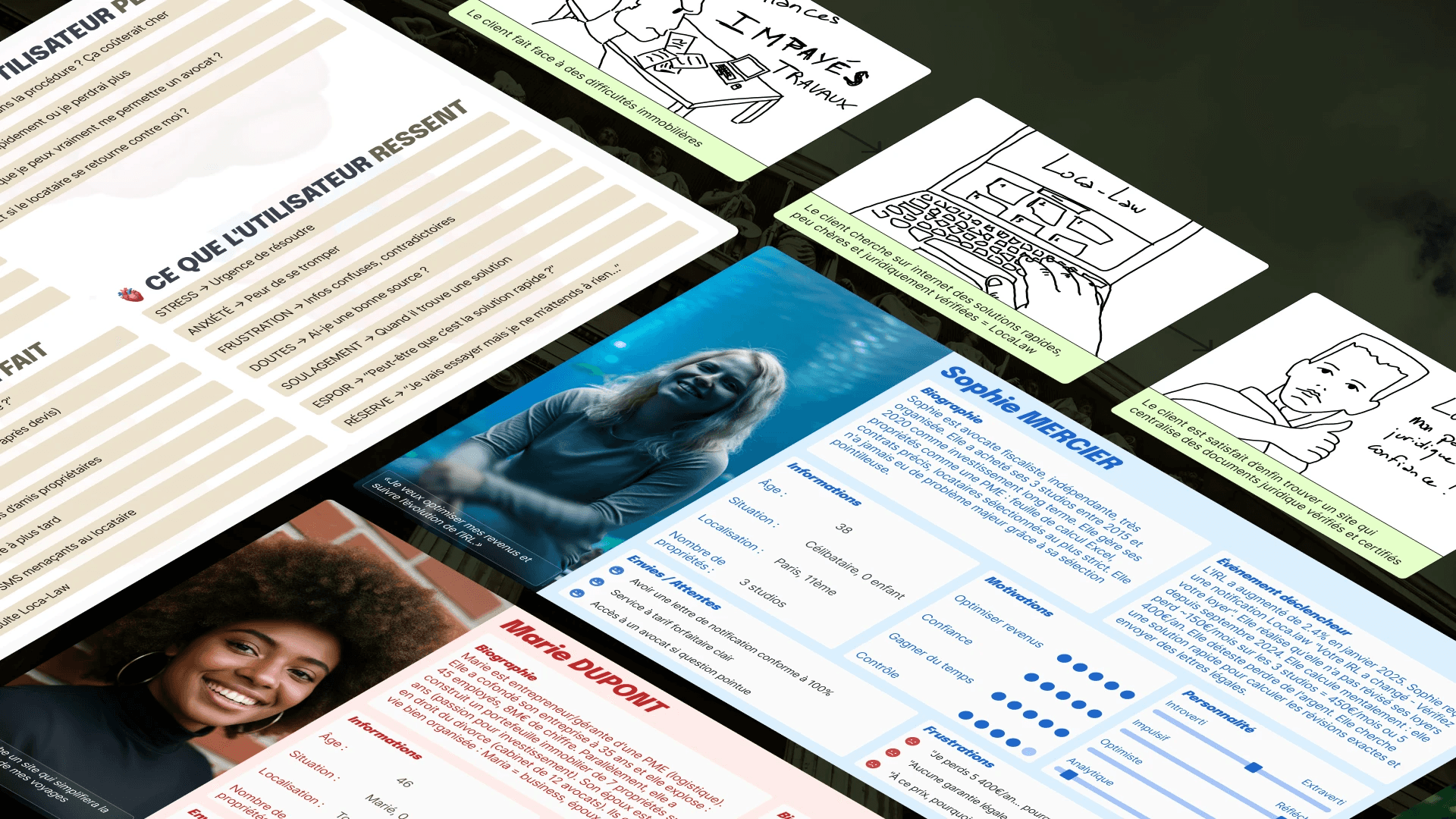
Understanding personas to improve conversion
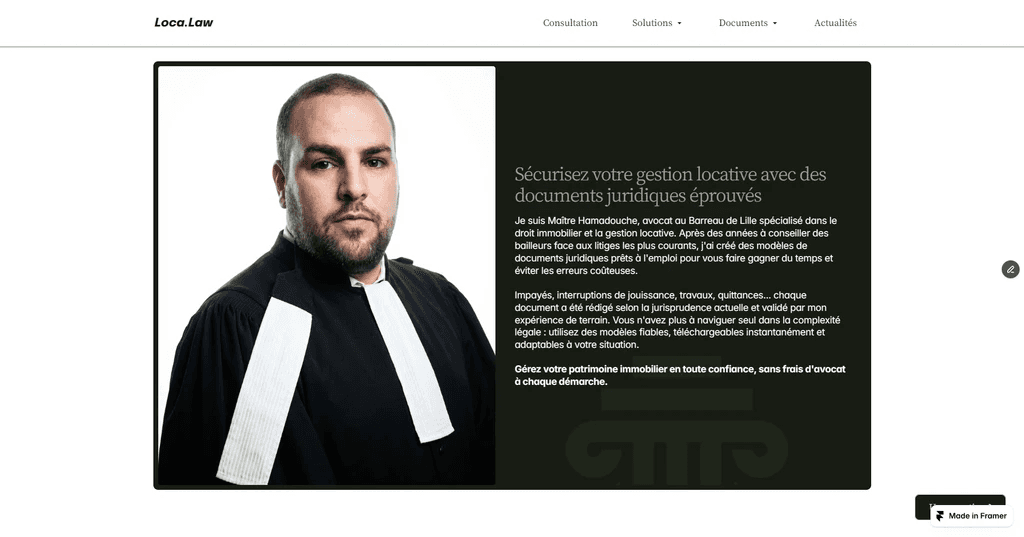
Before designing a single page, I spent time understanding who Maître Hamadouche was trying to reach: landlords anxious about legal obligations, property managers looking for document templates, lawyers seeking specific resources. This step allowed us to define the key messages, pain points, and conversion paths for each type of visitor. Without this understanding, we would have built a generic website—with it, we built an actionable tool.
3.
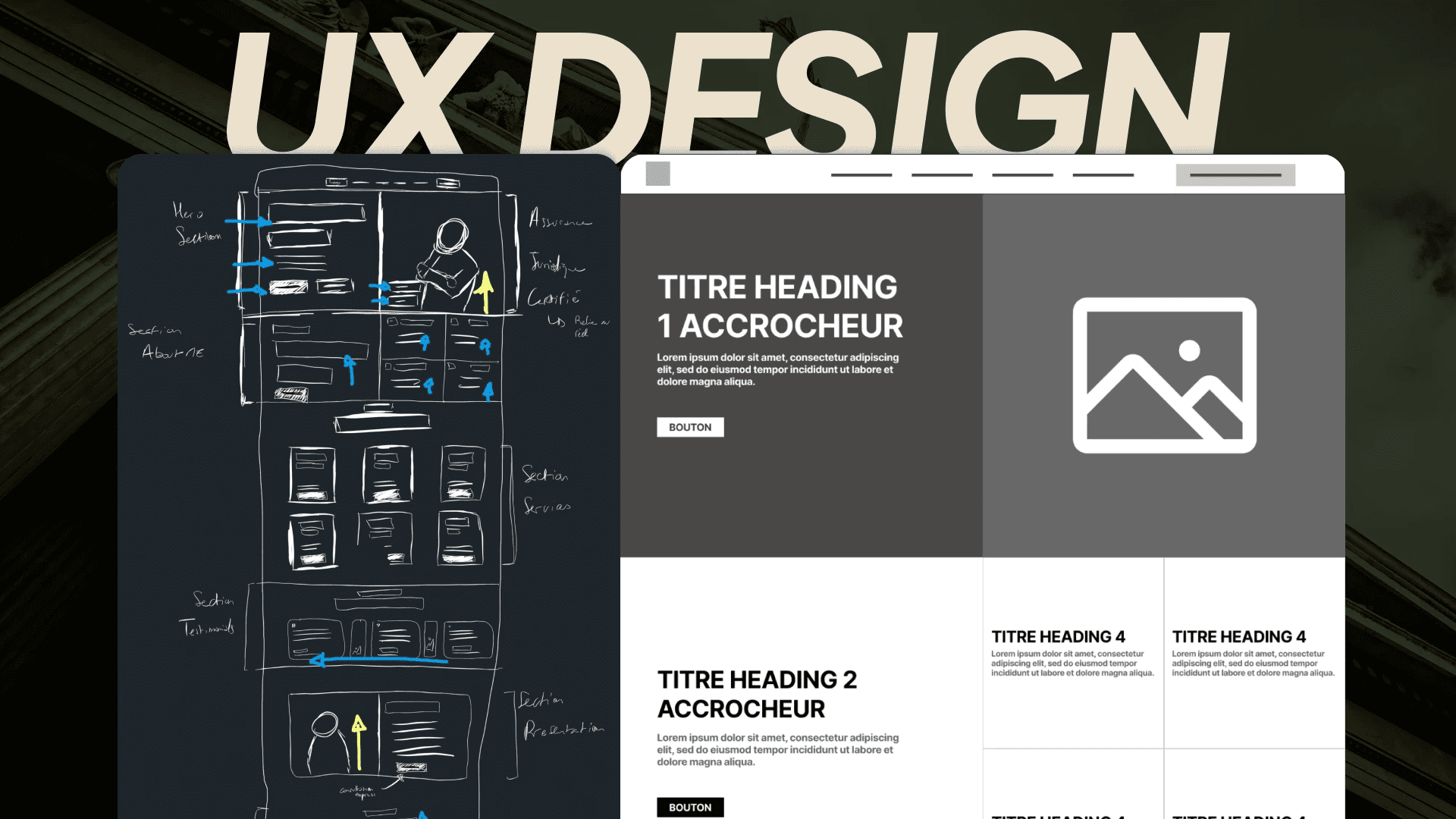
From paper wireframe to validated architecture, step by step
I started with freehand wireframes to quickly explore different architectures, then moved on to grayscale sketches to validate the page logic without being distracted by colors. This rigorous approach allowed me to test several conversion paths, identify pain points, and build a solid skeleton before even touching Framer. It's this often-skipped step that makes the difference between a site that converts and a site that's engaging.

Conclusion
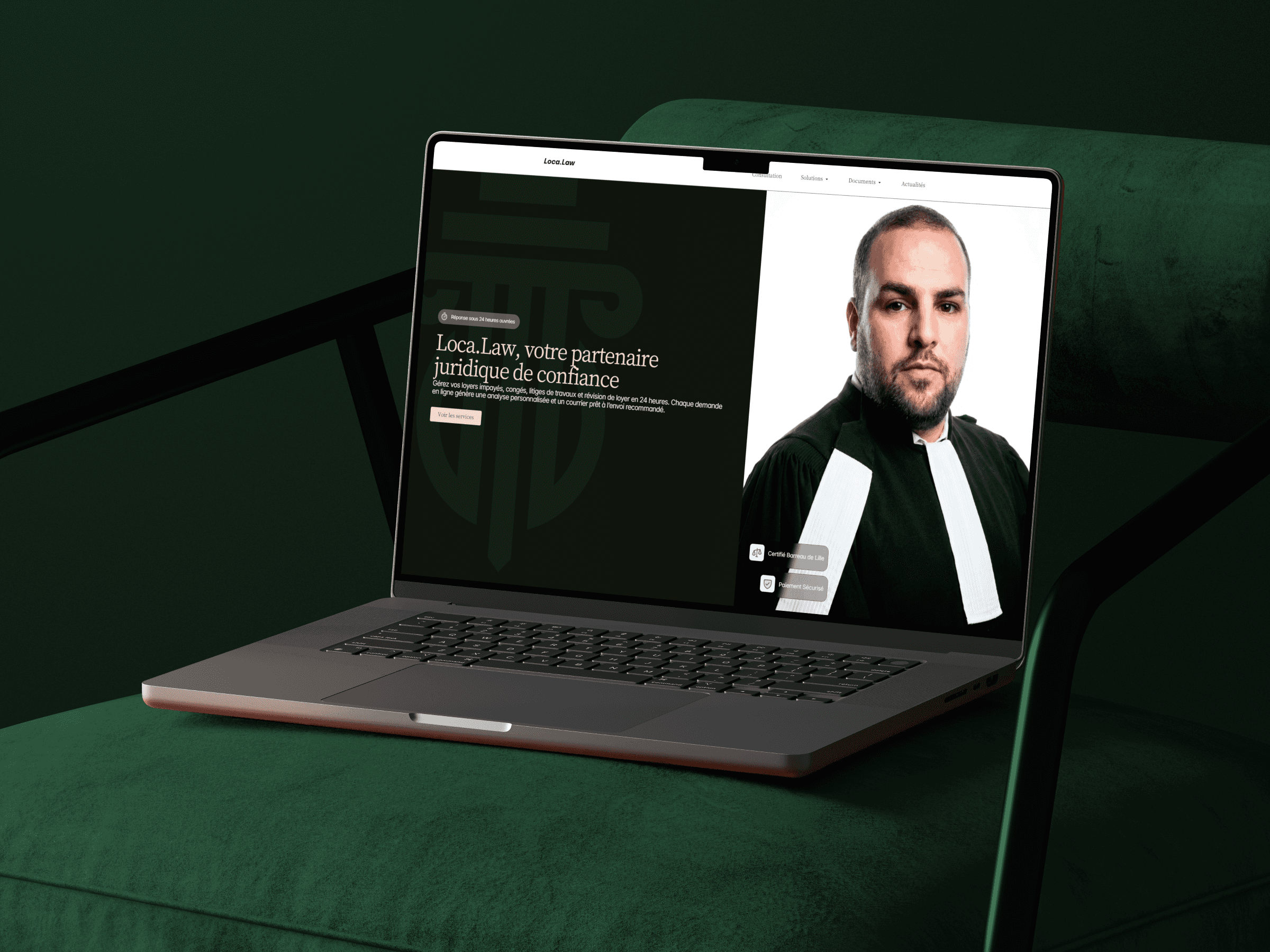
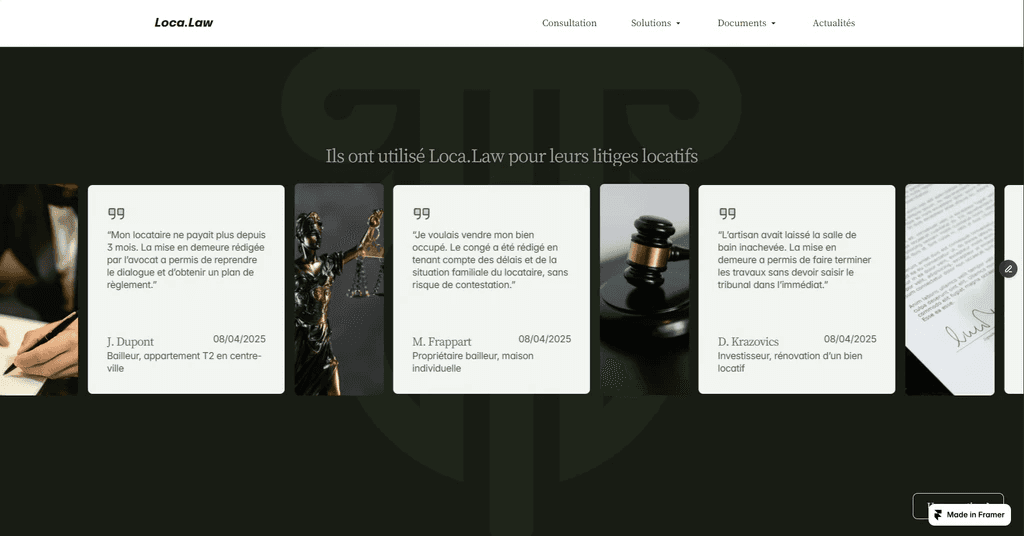
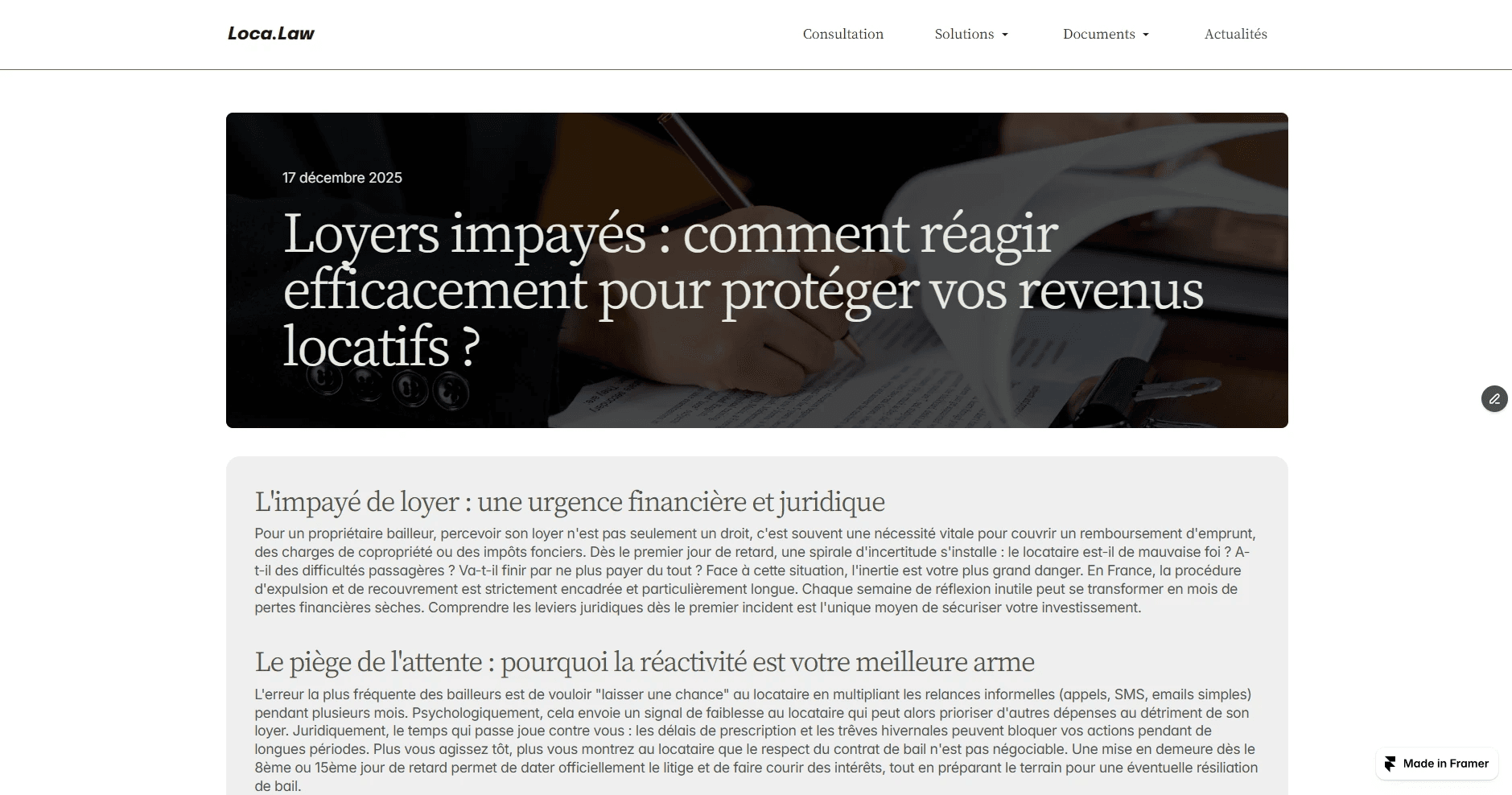
The final design: monochrome gradients for credibility, few complex animations to maintain clarity, and a logical architecture to guide without confusing. On the technical side, I developed three separate CMSs (Services, Blog Articles, Guides) to allow Maître Hamadouche to manage his content independently—this was the delicate but fundamental part to ensure the site's survival through future updates. Mr. Hamadouche is satisfied with the project and its results. So much so that he recommended our collaboration for another project. This is the best possible validation: a returning client is a client who has seen a real impact.